Category Archives: English

ME(n) TOO – eng

The un-screamed scream of men


There was something in recent social campaigns aimed at highlighting abuse perpetrated by men that I felt uncomfortable about. It wasn’t till recent constellation I facilitated in Turkey that I could understand my discomfort better, and also explore how different levels of acting in the world correlate or interfere with a systemic approach.

Surely, those who abuse have to be hold responsible and, if possible, be appropriately sanctioned. Surely, gender based abuse has been going mostly one way, in a direction from men to women. Sure, women on the whole have suffered greatly through centuries of patriarchy.

It is clear that social, political and legal action is appropriately called for, no doubt about that. But, there is more to it than that, these areas only highlighting some aspects of the complexity inherent to our male – female human predicament and the related issues. Having been a systemic constellation facilitator for many years, I am primarily interested in the systemic aspect of issues concerning a relationship of one half of humanity towards its other half. And there is no doubt that the relationship between these two editions of human beings has been badly damaged and is in trouble. We can all witness that. Women have been oppressed and treated like a “lesser value half” for centuries, only in the last hundred years or so gaining more ground in terms of their human rights and equality. But this battle is far from over, as we are reminded daily by more examples of oppression and unequal treatment. And it does seem appropriate to call this process a battle, as so often our male-female relations are remindful of the two sides in the waring conflict. It is as if we have less and less understanding of each other, less compassion for the other’s position and no solutions which would have us “battling” these issues side by side, together, rather than each other.

Adopting a systemic perspective provides an opportunity for both men and women to do exactly this: stand side by side and open ourselves wide to the insights that come to us about systemic forces which created such a stand-offish position between us at the first place. It also means non-blame, no judgement, it doesn’t necessarily call for punishment or demand a retribution. It does not need to be concerned with legal sanctioning. This position is devoid of anger and moral righteousness. It doesn’t fight against or for anything. It only observes, with equal compassion for all included.

Only systemic perspective offers systemic solutions, which, as constellators know all too well, is always a solution equally good for everyone in the system. Every other perspective, like social action, legal sanctioning, political campaigns and other, has got a place and a role to play, and yet, if we go with them, we often loose the neutrality of the perspective needed to find the solution on a systemic level. From a systemic view point, as soon as we feel too much compassion for the victim, we side against the perpetrator. As soon as we see the two positions of a victim and a perpetrator as fixed and attribute them to a particular gender, we have lost the ability for a systemic approach. As soon as we even label something as “abuse”, we have already made a judgement which closes the door to systemic insight.

And, yes, we can assume, these different aspects can be addressed parallel on different levels, and theoretically it is possible for a systemic facilitator to also be an avid social justice campaigner or take political action. I would argue, though, that such position is extremely difficult and that in order to develop our “systemic sensitivity” we need to practice this attitude of non-judgement and radical inclusion daily, and in all aspects of our life, not just when we facilitate a constellation.

Gender relations are one of these areas where our systemic viewpoint can be valuable, and possibly more effective in bringing deep, lasting change than social campaigning. But it is certainly more difficult to hold this position of systemic restraint which does not “play the first ball”, specially when we are all effected, we all are either a man or a woman, and when taking sides happens by default. The extent to which we are able to practice this systemic restraint though, may be directly correlated to the possibility of new solutions opening up for us all.

These are complex issues and much is at stake. Clearly, the future of humanity depends on us successfully negotiating its “dualistic gender nature”. And it seems we are not doing too well at present. What the real systemic causes are behind this, it is difficult to grasp, but we understand it mostly as a legacy of a long period of patriarchy.

The Turkish experience

Probably nowhere more than in Turkey we see the consequences of patriarchy better. As a descendant and the systemic inheritor of Ottoman Empire, Turkey is the country borne out of it, patriarchy being its basic social building block. For centuries women have had no value, rights or equality, certainly not in ways we understand these today. Men were the masters of their lives, and their bodies. Many a constellation in Turkey takes us to the painful experience of their female ancestors, their despair and suffering made palpable through representatives, almost unbearable to hold. In one poignant constellation, which depicted the times gone-by, one woman’s question about overweight took us to her distant female ancestor, whose destiny this woman knew of. She was captured in the far corner of the Empire, taken away from her parents, country and kin at a young age and was kept as a slave, a possible gift to a Sultan. The only defense she had, and the only means of control over her body, and possibly over her predicament, was to overeat and thus make herself less attractive and less desirable.

It seems that many women in present day Turkey are not only angry with men in general, but have also given up on them, having no faith or hope that the hurt caused can be compensated for or healed. Some don’t have partners and if they do, they (women) seem to have an upper hand.  They often are hiding and protecting their feminine nature, with the sense of not being able to afford being vulnerable, to trust and to rely on men.

There are also women with a strong masculine energy, maybe compensating for absent or emasculated men.  Many men have, during the days of the Ottoman Empire, suffered this fate, being emasculated in a literal sense, having  been castrated so as not to be able to “saw their seed” and interfere with inheritance lines while performing their, usually servant functions. Regardless of our possible stereotyped images of Turkish men, it seems that their masculinity has been weakened too. Constellation after a constellation shows absent fathers, emotionally non-present partners, men who died early, took part in conquests all over the world, who killed and were in danger of being killed, constantly, through centuries. In other words, we see men weakened by traumas of violence. We see this in constellations mainly set up by women, and it is about their fathers and other male ancestors. Not many men partake in workshops and are cautious about setting up their questions. One man’s work was mostly about just crying bitterly on a seeker’s chair for a considerable amount of time. For another one it took six workshops to decide to set up his own work. It is this man’s constellation that impacted me, and others present, greatly.

He mentioned at the beginning that he had not had any older male models in his family. One of his grandfathers died when his father was only three years old. The other one suffered a terrible trauma serving as a soldier, being inside a tank as it exploded. As we set up this second grandfather, many participants in a group could feel sick to the stomach with sheer horror of his experience, the pain and suffering literally spilling out of a constellation. We all witnessed the representative for the grandfather going through agony, but not really being able to express his pain. It was as if he had to contain it all within himself.

This portrayed a somewhat universal picture, almost like an archetype of a contemporary man, of how men are supposed to be. Outwardly, this man’s suffering was manifested as “strictness”, that is how he was in his life, as described by his grandson, who also added that he never liked this grandfather, and kept away from him. Before the constellation this grandfather  was described without much compassion, as a cold and strict man. His representative reported on his inward experience, as he was channelling the glimpses of the grandfather’s trauma: “There is a huge scream in me wanting to come out”.  But nothing came, he remained silent, containing all the agony within, motioning helplessly.  This image made me wonder, how many men go through life like this, each closed in within their own tank, unable to let the scream out!?

It was interesting that many women in the holding circle though, have felt and expressed, seemingly, what he could not. Also, during and after a constellation many participants wept with compassion for this man and his fate. Everyone was touched as it was obvious how this man, and how many men have suffered through endless wars, army service, far away from their homes, their lives endangered, often forced to kill as not to be killed. Observing and feeling the group, I had only one thought in my head: “the suffering of Turkish women through centuries can only be matched by the suffering of Turkish men”.

And I understood that this is how it has been, and partly still is,  all over the world and all over again. Men are the victims of patriarchy too. Many of them could also say “me too”. But even such outing, which could provide a bit a of relief, is not available to them. Because they are, on the whole, seen as the perpetrators of patriarchy, the ones to blame and hold responsible. And, it is true, their kind has caused suffering too, so now, in addition to their pain, they have to carry that responsibility as well. This often means desperately trying to hold onto their masculinity, or the stereotyped view of what it means to be a man and act “manly”, which often includes introjects like “be strong, don’t cry, don’t show vulnerability”. And it is still expected of them to go out there, earn the living in increasingly competitive environment, support their children if not their wives as well, and to be a protector, and also “sensitive” to our, women’s needs. And how on Earth can they do that without our support, our compassion, not just for them and their position in the world, but for all of us caught in this deadly tango we can only dance together?!

Me too, I suffer this predicament us women and men found ourselves in. And I understand that you too, dear man, suffer, suffer deeply and without the right to victimhood, without the outlets for sharing pain available to us women, suffer in silence. I too understand now how deeply you have been hurt, carrying the pain of violence and wars in your body/soul without the permission to cry, and how tough you had to make yourself to contain that scream inside. I understand a bit  better now as I systemically open myself to everything and everyone, across gender lines, and without preconceived judgement, thus enabling my soul to hear not only the cries of women, but also the un-screamed scream of men.

I do believe that as more of us, men and women, are able to hold this position of a systemic observer, just allowing everything that has happened to find its place and its expression, without need for judgement, action, punishment, compensation or atonement, the new systemic insights will emerge, creating a path for us, men and women, to walk onto, towards our shared future,  in more harmonious ways. Systemic constellators among them surely can help to pave that way.


Alemka Dauskardt

first published in “The Knowing Field” International Constellations Journal, issue 32, June 2018

 

The Sacred Cows of Ethics (ENG)


by Alemka Dauskardt

Published in the issue 31 of the Systemic Constellations Journal “The Knowing Field”

(as a response to the article “Ethics” by Steve Vinay Gunther, issue 30 TKF)


I am thankful to Steve Vinay for making an effort to explore, examine and summarise ‘the ethics issue’ of Constellation Work, considering eloquently so many related aspects.

Not an easy job. Many interconnected issues come under this one umbrella and, on the whole, the constellation community has been struggling for some time with which stance to take. The subject has largely been ignored, but it lurks behind many discussions on many a forum. We certainly haven’t come to any formal general agreement and often don’t have a shared understanding of what we are really talking about under this heading.

Along with many other facilitators, I have often pondered this question and have been challenged to find my own place on this slippery ground. I have been genuinely interested in the implications for us as facilitators, individually and collectively, of taking this or that position. I was part of the ISCA working group on ethics years ago at the annual Intensive in Bernried, Germany. Also, at last year’s ISCA’s gathering, one of the working groups was devoted to these issues on my initiative. Reading Steve’s article allowed me to re-visit and clarify my own position. I have been coming to this place for many years and now I can say my personal belief is that there is no place for ethics in Constellation Work! At least not in the framework we currently use for this term.

In this very personal response to his article (but not necessarily to his contentions only), I do not want to engage in further discussion about any particular aspect of ethics, but will use this opportunity to briefly explain what brought me to adopt the above position on this theme.

Ethics or moralistic thinking is a branch of philosophy that involves systematising, defending, and recommending concepts of ‘right’ and ‘wrong’ conduct. It is an expression of the belief that there is a universal conscience, which helps us to distinguish ‘right’ from ‘wrong’ – one of the central beliefs our Western civilisation rests upon. The most prominent promoter of this belief is the Church with its teachings about conscience as ‘the voice of God’. This belief is also behind wars, judgement, calls for punishment and/ or annihilation of the ‘bad/wrong’ ones. ‘Professional ethics’ is this attitude and this morality applied to a particular field, in which there is always a group of people defining what is ‘good’ and ‘bad’ practice and sanctioning accordingly.

As expressed by Bert Hellinger himself, his most important insight underpinning SCW, is that there is no ‘good’ or ‘bad’. This is connected to the insights on conscience, the workings of which, also according to him, are not understood by most constellators and form the backdrop of most of the opposition to Hellinger, in the mainstream as well as among therapists. In my opinion, it is also the main reason why SCW is not more widely accepted.

Our insistence that we know what is right or wrong (either generally or in relation to a particular practice or profession) is bound to fail. We only need ethics in the moral world, and thankfully, the world of constellations is anything but that!

This has nothing to do with relativism and unaccountability. It relates to the systemic and spiritual nature of our world, with our ability to turn to everyone with equal love, in facilitation and in life, with full awareness that our conscience is a poor guide and, much against the advice of Pinocchio’s Jiminy Cricket, should not be followed.

Much of what is written about the issue of ethics among constellators, clearly follows the conscience of the professional field of Psychotherapy. It is understandable, considering the historical development of CW, but this is history. So is Psychotherapy, as we know it.

Constellations are a method of insight and development for the new world, not only post-modern but also postmaterialistic, which bears little resemblance to the old. Psychotherapy is part of that old world; it belongs to that old paradigm of our absolute trust in science and knowledge, which can be reached by scientific methods only, and is governed by that conscience.

However, the major paradigm shift has already occurred, and is expressed through much new theory and research on consciousness (see references below). It is shaking some fundamental beliefs we have about our world, especially in the areas of physics, biology, genetics and psychology. We also know it each time we enter a constellation space.

Despite being a Psychologist by education and working as a Psychotherapist for many years, I do not call myself that any more. Through my own practice I have come to full agreement with Hellinger’s position that Constellations are NOT Psychotherapy.

Many facilitators want to embrace ‘the new’ through their practice of constellations, while at the same time ensuring that their ‘psychological practices’ remain accountable, as cited in Steve’s article. Accountable to whom? To the old master, the scientific discipline of psychology and the ensuing practice of psychotherapy.

Opposition to Hellinger and his constellation work often comes from psychotherapists who think this way. Wanting to embrace the new, not wanting to give up the old. This is equivalent to trying to row to the middle of a lake, while making sure you are still fully attached to the shore.

But there is only so far we can stretch the rope before it breaks; only so much change we can introduce to the old before admitting that there is something new now and different rules apply. There is great resistance. There is an inbuilt desire for survival in every system – systems want to keep existing. Those who challenge their boundaries by introducing too much change, are punished and/or excluded. Many psychotherapists in Germany and elsewhere defended their established professional system through vicious attacks on Bert Hellinger and SCW, thereby managing to keep any threat towards mainstream psychotherapy at bay. The ‘ethical considerations’ were always cited as the legitimate concerns justifying these attacks.

Hellinger’s Constellation Work challenges not only psychotherapy, but also many of the established and cherished notions that our materialistic, dualistic and, above all, moral world rests upon. This is bound to be defended mightily. Constellators join in with this defence. The calls for ethical standards are the calls for SCW to abide by the rules of the psychotherapy profession, attempting to put it back into the familiar box of our materialistic, scientific and moralistic world.

There is also a very practical issue at play here, as the livelihood of many constellators depends on their agreement to abide by the rules and regulations proscribed by their respective professions. Therefore, much is at stake.

Systemic knowledge tells us that the only option for the carrier of the new (if he/she manages to stay alive) is to form an essentially new system. I also contend that if we want Constellations to survive as a distinct new modality, we have to jump into that boat and cut our ties to the shore. Otherwise, it will be stripped of its uniqueness. It will lose that special quality we all feel so attracted to, and which makes it so effective, and will become diluted until it can be safely absorbed into the widely accepted, more established disciplines. We are already witnessing this happening within the Field of SCW.

And finally, just one more point I want to pick up on from the article: its call towards “having more debates, challenging assumptions and questioning sacred cows.” (p 40, Steve Vinay’s article, issue 30, june 2017)

I would agree and suggest that one of the first cows whose eyes we need to look at should be the belief that we have the freedom and the right to question everything under the sun and to ‘critically examine’ everything. This practice has high value among constellators, I noticed, and is not easily challenged.

Another cow, which looks more like a dog(ma), is our right to express our opinion of what we think is ‘right’ or ‘wrong’, and indeed to insist on these distinctions. Among constellators, the value of “speaking up” or “standing against the bad, backward, oppressive, abusive, right wing, patriarchal… whatever” is considered desirable and called for. Political correctness is finding its way into the Constellating world too and is interfering with systemic insights.

If there is any need for ethics in the world of constellations, it would have to be a very different, new ‘constellation ethics’, following a different conscience. Such ethics would perhaps dictate that we deeply respect our teachers, that we follow systemic authority and orders or for example, that we do not gossip or ‘critically dissect’ the work of other constellators, certainly not on public forums. And this not because someone prohibits it, but because we receive such guidance upon asking ourselves the question: “What effect does this have on my soul?”

I also want to propose that the belief in the “importance of ethical standards” is just another cow. It is all part of a certain conscience, but we don’t see it like this, because we are right in the middle of it.

I just had this colourful image of many poor cows being sucked away by a cyclone in an upward centrifugal motion. But, not to worry – sacred cows are safe in the eye of the storm!


Notes:

  1. Monthly letters 2011 February http://www.hellinger.com
  2. International Systemic Constellation Association. Established in 2007 at the Congress in Koln in Germany, ISCA sees as its mission to ‘serve as a hub and holder of system constellation work in all its settings and applications for present and future generations of constellation’s. With a recent change of direction in 2015, reflected by changes in its Charter, it has broadened its focus to include more general issues affecting constellation practitioners around the world. (see http://www.isca-network.org)
  3. ISCA Working Group on Ethics, ISCA Meeting, Bernried, Germany, 2010
  4. Working Groups, ISCA Gathering, Zagreb, Croatia, 2016
  5. Dauskardt, Alemka. Psychotherapy without Psychotherapists: How do Constellations help? Presentation at the International Conference ‘Ethics & Psychotherapy’, Croatia 2015.

REFERENCES:

Bert Hellinger, Monthly Letters, 2011, February,  http://www.hellinger.com

Dauskardt, Alemka Psychotherapy without Psychotherapists: How do Constellations help? Presentation at the International Conference on ‘Ethics & Psychotherapy’, Croatia 2015

Hillman, James & Ventura, Michael (1993): We’ve had a Hundred Years of Psychotherapy and the World’s Getting Worse. Harper Collins,

Mark Hubble, Scott Miller: How Psychotherapy Lost Its Magic. Psychotherapy Networker, March/April 2017 issue.

Bobby Azarian: Neuroscience’s New Consciousness Theory Is Spiritual. The Huffington Post, 21.9.2015, http://www.huffingtonpost. com/bobby-azarian/post_10079_b_8160914.html

EXTENDED REFERENCES:

Siegel, Daniel (2017) New Psychotherapy & Belonging. 6.14.2017 Psychotherapy Networker.

Dauskardt, Alemka. Psychotherapy without Psychotherapists: How do Constellations help? Presentation at the International Conference ‘Ethics & Psychotherapy’, Croatia 2015.

Hellinger, Bert (2008) Rising in Love – A Philosophy of Being. Hellinger Publications, Germany.

Laszlo, Ervin (2004) Science and the Akashic Field. Inner Traditions, Rochester, Vermont, USA.

Lipton, Bruce (2008) Biology of Belief – Unleashing the Power of Consciousness, Matter and Miracles. Hay House Publishing.

Sheldrake,Rupert (2004) The Sense of Being Stared at and Other Aspects of the Extended Mind. Arrow books, London, UK.

Sheldrake, Rupert. The Science Delusion. http://www.sheldrake.org

Sheldrake, Rupert (2012) Science Set Free.  Deepak Chopra Books.

Miller, Scott (2017) How Psychotherapy Lost Its Magic’,  March/April issue, Psychotherapy Networker.


Den Epilogue to Den Haag (ENG)


There is no doubt that we Croatians, and some other actors, are in the midst of a drama with epic proportions. The title could be something like ‘War and Piece in the Balkans’ or ‘The Suicide of Justice’, or ‘Killing off the Hero Within’. Whatever the case, it is clear that the themes are big, universal and archetypal. And that there are lessons to be learned.

The general of the Croatian army who fought in Croatia and Bosnia during the last war, has been found guilty of war crimes and sentenced, after surrendering himself to the War Crimes Tribunal in The Hague, having already spent 13 years incarcerated. This sentence concludes the work of this court for war crimes committed in the Balkans, after many years of trials, witnesses, reports, deliberations, publicity, anguish and destinies appearing before us, as if appearing on a big stage of history.

The ultimate director of this play has staged the final sitting of this court, which presided over delivering sentences and ‘dishing out justice’ to many Croats, Bosnians and Serbs involved in the conflict. This took place on 29 November – the biggest state holiday and ‘The Day of the Republic’, in the state of Yugoslavia, now itself just a corpse, upon whose death the whole conflict erupted in the first place. Is this play a farce, a satire, a comedy perhaps?

Upon hearing the verdict, one of the accused generals, who, before becoming a general had a career as a film director and worked in theatre, yells out: “I am not a criminal” and drinks a poison from the small bottle concealed in his hand in front of the judges, those present in court and the TV audience of many, as the trial was screened live. The judges are stunned and not knowing what to do,  just usher for: “the curtain, the curtain.” Blackness ensues. THE END.

The man dies later in hospital. The stunned Croatian audience/nation does not know if they should clap or not. For whom and for what? Booing also doesn’t seem appropriate. Just an odd whistle with unclear meaning, breaks the silence here and there. As the public reaction of the Croatian Government, public commentators and social media show, no one is sure what kind of epilogue to write, what is appropriate in this scenario they have never witnessed before. Some yell: “Hero!”, others: “Coward!”; some proclaim: “Justice is dead” and call for a different judgement. The War continues.

Wars can’t be over through seeking justice in court, or by looking for objective truth. Nor by attributing blame or establishing guilt. Wars can’t be over as long as we continue to look for the culprit, the person or persons responsible, the guilty one(s). Wars can’t be over for as long as one side considers itself better than the other. Wars can’t be over if we need heroes.

The legal process of establishing personal responsibility for those few who were the executors on behalf of their leaders and their nation does not contribute much to the process of true reconciliation. Our reaction to justice as determined by courts is always dependent on our national belonging. We all seek: “Ultimate justice” and call for :“The objective truth.” When are we going to learn that this is an illusory quest?! When are we going to realise that there is no one Right or one Wrong? When are we going to understand that there is no one god?

How many more wars does it take and how many more perpetrators do we need, whose actions we deem abhorrent, standing in court and declaring: “I am not guilty” for us to understand?

No man feels guilty for killing those outside the boundaries of their own tribe. No Croat, no Serb, no Muslim, no German, no Israeli. We kill those who follow a different god with good conscience, and with the blessing of our god. And we feel like heroes and are considered to be so by our tribe. The same man is seen as a hero or as a war criminal, depending on the colours of the seer.

The solution is to turn away from these lesser gods and turn to God who lets the rain fall and the sun shine on the just and unjust, innocent and guilty equally. We have to follow the God who is kindly turned to everyone, victims as well as perpetrators, right as well as left, red as well as green.

We have to see that our brother Serbs or our brother Muslims were killing with the same zealousness as we Croats, with the same conviction that they were fighting for a just cause as we had. We have to see that they do not and cannot feel guilty about it, as much as we can’t about our own killing. All sides in all wars fight for: ‘The good cause’. Yes, with tragic consequences and always with the same tragic blindness. And what is it that blinds us? Our conscience. Because every tribe has a different conscience, and every tribe believes that theirs is the universal one. And that theirs is the right and just one!

We are all guilty and we are all innocent. We are all victims and we are all perpetrators. True reconciliation happens when we look at the trail of blood our convictions have left behind. When we look at the victims, the dead on all sides, with the same piety and respect, with the same pain in our heart. When all the victors come to their knees and sob at the destiny of those defeated. When we, the descendants, look at all the dead and grieve for all of them, without seeing the marks on their uniforms, without knowing which army they belonged to. Yes, ultimately it is about feeling the same love for all.

The Croatian curse is not only that they had the enemies outside of their tribe, and that they continue to harbour these conflicts, but the fact that WWII had the nation split in half: half of the nation followed one ideology while the other half followed the other. This split continues to work in us, like in bad horror movies or in psychiatric wards in which one part fights the other, in which we harbour our worst enemy, the perpetrator within ourselves. Croatians are a schizophrenic nation. It makes it difficult, if not impossible to deal with the outcomes of later wars, to face the future, or, as the pathetic Croatian political scene shows, deal with any practical issues in the present.

But, ultimately and in every situation, under any circumstances, we have to understand that the Partisans were no better that the Ustashas. Or that the Ustashas were not bigger Croatian nation lovers than the Partisans. Or that those fighting for a united Slavs communist state of Yugoslavia were no better than those wanting an independent state of Croatia. Or the other way around. These are just different ideas, with ideologies built around them, and each one of them has their followers, as well as those opposing them. No ideology, no idea is worth fighting for, because inevitably, a trail of blood follows. No idea, no cause is worth fighting for, because no one idea is better than another.

Fighting for peace brings war. Let them be side by side. War and Peace. Give them both their place. Bow and say: “I do not understand what purpose you have, which master you serve. I leave it all in higher hands. And I do not interfere. I do not try to take God’s place and I do not act on his behalf.”

We don’t need to yell out loud our love for our country, we can just tend our garden quietly. We can serve our country by not spilling blood in her name – ours and that of others. We can be hospitable hosts and good neighbours, welcoming the guests from other tribes, preparing our national dishes for them. We can be a country which doesn’t need heroes, where men stay at home and plough the field and make love to their wives. We can be a country where fathers don’t leave their sons in cradles, never to return from war. And we can respect those men who do the same across our borders. We can be the country whose mothers and wives keep their men at home, because it is precisely this that war kills first: a connection between a man and a woman, with far reaching consequences for our world.

War kills love, not just between a man and a man, not just between a Croat and a Serb or a Muslim. War kills love, that warm, intimate love between a man and a woman, right there in their bed.

So, women, love thy man, and keep him at home. And, men, love thy neighbour and respect his love of his country and land. And all of us, let’s love our country by turning to our garden, tending it with care, making it flourish and prosper.

And the dead, those killed in the past wars, do we forget them? No. We look at them with love, at all of them and their killers lying now beside them. And we say: “We are all the same, there is no Other, we are all One.” And we put down the gun we pointed at our enemies, from our need to avenge those killed before, because we suddenly realise that, in pulling the trigger, we kill ourselves.

So, if this writer is allowed to changed the ending of this drama, as writers sometimes are, then the hero in our drama is the one who has this sudden insight and slowly, as if in a dream, gently lays his gun on the ground, turns around and walks slowly off the stage. The curtain comes down, the moment of suspended silence follows. The audience raptures in thunderous applause. The hero hugs his wife and children backstage, decides to leave his acting career and together with them heads home to feed the animals and water their garden.

THE END


Alemka Dauskardt

2.12.2017. Zagreb, Croatia

Family and Systemic Constellations: a method, approach, therapy or something else? (ENG)

By Alemka Dauskardt, M.A. Psych

Family and Systemic Constellations are  a living and growing body of knowledge that is mostly discovered through an experiential method of inquiry.

It successfully resists any attempts to be comprehensively defined. As soon as we say anything about it, including how it came about or who “invented” it, as soon as we call it this or that way, there is a myriad of voices who offer a different perspective.

Risking that, I offer my view that Family Constellations have been developed by Bert Hellinger, a German psychotherapist, as an innovative and original approach, through synthesis of many different modalities and strands of knowledge coupled with his own phenomenological insights.

It was originally applied within a psychotherapy framework as a method of offering professional help in ameliorating some of life’s difficulties which are encountered in everyday living. At the beginning it was maybe merely a method in which unrelated persons were set up to represent family members, and through which we gained a direct insight into the dynamics operating in the system being set up.

A peculiar phenomenon which became apparent through these “set ups” was that strangers somehow picked up the information about the family members when they were set up to represent them.

This phenomenon of “representative perception,” which was informed by what was later referred to as “the knowing field” allowed us to gain insight into the particular family dynamics, the blockages and all, and then also to balance, to unblock, to restore, or to include, which often brought relief and healing.

The phenomenon of the knowing field and of the ability to gain direct knowledge about any human system through representative’s perception has become a hallmark of the constellation method which distinguishes it from any other. So, “constellations” are a method of setting up, the doing of it aptly named “constellating.”

As constellation after constellation was set up, with the same phenomena being observed, firstly by Hellinger and then many others, and in many different cultures all over the world, it became obvious that we are not only dealing with a method of therapy but also learning something important about how our relationships operate.

The universal laws of life, often called the “orders of love” started to emerge and revealed a view of most intricate, co-dependent network of interrelationships in human systems, governed by mighty forces which followed their own logic, unrelenting in pressures they exert on us. And which we are totally oblivious about. Through constellation method, we started to re-discover the ancient knowledge available to many traditional tribal cultures, all but lost for us, the inhabitants of modern world.

This knowledge, this time coming to us through the phenomenological insight gained through many constellation set ups, became intrinsic to what we today refer as the Family or Systemic Constellations approach.

It is a new body of knowledge of human relationships, which concerns the orders that operate in our relationships, the importance of systemic conscience as well as the awareness about how these are being played out in partner or parent-children relationships, relationships to our ancestors, relationship between victims and perpetrators, national conflicts and reconciliation, and relationship to the Spirit.

It allows us to look at some of the most difficult issues we as humans face in our lives and it guides our interventions. It also sometimes allows the opportunity to alleviate profound suffering.  In that it is the most powerful approach I have come across, and many others who encountered it around the world agree. Its popularity has been increasing steadily, the enthusiasm and acclaim by which it is met only matched by the controversy it also regularly elicits from more established disciplines.

Out of this experiential knowledge gained through many a constellation, the view of the world emerged which we can not ignore but by which our established worldview is deeply challenged and with it some crucial concepts that it rests on: like the very notion of good and bad, conscience, independence, freedom, free choice, rationalism and individuality, dualism of matter and non-matter, separation of body and soul – and other.

However, if we take the phenomena we observe in constellations seriously, then a whole new world opens up to us. This world is uncharted, reveals itself to us only in the next step, is mysterious, deep and powerful, limitless, conscious, living, breathing and above all – loving.

Available to us only if we approach it from below, humbly, sticking closely to the ground, with respect and no intention, only helpful if nothing is demanded. Learning how to navigate through this world requires years of learning, purification and spiritual discipline, the learning that never stops as new, ever more astonishing vistas open in front of our (closed) eyes.

So, what is a constellation? What does it mean to constellate? Who or what helps in constellations? Can it be practised within a psychotherapy or any other framework?
One can, maybe, only use “constellation method” without applying “constellation approach,” or apply “constellation approach” without adopting the “constellation world view” which lurks behind.

The question of “what is a constellation” or “what is a Family Constellation” can only be answered by individuals who are on different stages of walking the constellation path and the answer will be different for everyone. Also, constellations keep changing, growing from method into a science of human relationship into a world view.
 
The insights gained through constellations also reveal that the “orders of love,” whose universality and immutability we only just discovered, might be changing. In addition, the founder of the constellation approach keeps developing it further, claiming that what we have put much effort to learn so far is already superseded by new ways of family constellating.
 
No wonder we have difficulty explaining what it is we do when we offer constellations! No wonder every attempt among the practitioners to find this one definition of “Family Constellations” remains elusive.
 
This also makes Family Constellations a unique discipline, different from any other. It is in constant flux, can become known only through our own personal, individual perspective, is experiential and essentially undefinable.
 
If I have learned anything in my twenty-something years of “constellation contact,” it is that it always keeps me on my toes, requiring constant learning, re-learning, letting go, challenging assumptions and change. By now, I am certain there is no end to that – there is always more!


About the author

Alemka Dauskardt, MA Psych, is a Systemic Constellations practitioner in Zagreb, Croatia. She offers constellation workshops and education in Croatia and elsewhere, translates constellation literature and promotes constellation work in various ways. She is an active member of the International Systemic Constellations Association and a regular contributor to The Knowing Field journal. She expects to attend the 2017 North American Systemic Constellations Conference.

As first published on North American Systemic Constellations Blog

http://www.nasconstellations.org

drvs korijenima

Ljubav i rat / Love & War (CRO & ENG)


Muškarci su oslabljeni kroz generacije, najviše kroz ratove. Ili su odsutni očevi i muževi dok ratuju, ili se nisu iz rata vratili, ili su se vratili kao prazne ljušture, samo fizički prisutne.

Žene su kroz generacije naučile da se ne mogu osloniti na muškarce. Poginuli djedovi i emocionalno odsutni očevi odgajaju sinove koji ne stupaju u svoju punu muškost i ne mogu preuzeti odgovornost svoje muške uloge. Žene u odnosu sa njima ostaju razočarane i same, rađaju djecu, ali i “oblače hlače”, preuzimaju i odgovornosti muškaraca. Time je i njima onemogućeno ostvarenje njihove pune ženskosti. Osjećajući se nadmoćno, gledaju na muškarce sa indignacijom ili ljutnjom. Najviše od svega su umorne i razočarane. Svoje sinove onda vežu uz sebe i često se od njih nadaju dobiti ono što nisu dobili od njihovih očeva.

A kći niti može imati dobro potrebno iskustvo sa prvim muškarcem u njenom životu – njenim ocem, niti može naučiti punu ženskost od svoje majke. Sin odrastao u ovakvoj dinamici ne može postati dobar muž, niti ova kći nekom dobra žena. Krug se zatvara. Živimo u vremenu oslabljenih muško-ženskih odnosa, oslabljene muškosti i naoko jake, ali neispunjene ženskosti. Ovo su prave, ozbiljne, tragične posljedice ratova. Ukoliko se oni ponavljaju kroz generacije (kao na našim prostorima), potrebno je ponekad otići i pet generacija unazad da bi se u određenoj obitelji pronašla zdrava, neoslabljena muška ili ženska energija.

Partnerski odnos uključuje sve ovo. Tako često partneri vide samo jedno drugo, i u ljubavi i u konfliktu. Kada smo zaljubljeni vidimo samo jedno drugo. I kada stvari, neminovno, pođu po zlu, ne preostaje nam ništa drugo već da krivimo jedno drugo. Pronalaženje izlaza iz ovakve situacije je u proširivanju našeg vidokruga, tako da on uključuje ne samo našeg partnera, već i njegove roditelje, pretke, porijeklo i sve ono što pripada u njegovu / njenu obiteljsku sudbinu. Kada iza našeg partnera vidimo sve ono što on / ona donosi sa sobom, sve što pripadanje njegovom / njenom obiteljskom sistemu podrazumijeva, sve prošle traume, sve pokidane veze sa svim posljedicama, tek tada možemo reći da vidimo našeg partnera. I tek tada možemo reći istinsko DA našem partneru. I tada nema iznenađenja ili ljutnje kada zaljubljenost prestane i kada se u našem krevetu pojave svi duhovi prošlosti.

Partnerski odnos može izdržati test vremena i težinu životnih zadataka samo na ovaj način, uz ovakav proširen vidokrug značenja pojma LJUBAV.


Patrijarhat je naudio muško-ženskim odnosima, žene su danas u obrambenom stavu, ne usuđuju se vjerovati i prepustiti muškarcu jer je on u prošlosti zloupotrijebio to povjerenje.

Zašto su muškarci zloupotrijebili to povjerenje kroz patrijarhat i njegove institucije i zloupotrijebili žene? Zato što su i oni sami bili zloupotrijebljeni od strane patrijarhata. Kroz njega su i oni sami bili žrtve. Njihova istinska priroda zaštitnika i onoga tko je u službi ženskog principa, koji ga poštuje i čuva je iskorištena. Instinktivan poriv muškaraca da brani svoje pleme, svoje žene i djecu od svih opasnosti i napada, iskorišten je za regrutiranje muškaraca u vojsku (instrument patrijarhata) koja je onda poslana u tuđe zemlje kao osvajačka, u službi ove ili one imperije.

Ovakvi ratovi koji odvajaju prirodni instinkt očuvanja i zaštite našeg plemena od samog ratovanja, ubijaju dušu ne samo muškaraca, već i same ljubavi. Lišeni smisla ovi ratovi odvode muškarce od njihovih žena i obitelji, daleko od zemlje njihovih predaka. Ovakvi ratovi ne ubijaju muškarce samo literalno, već kradu dušu i onih koji prežive. Kada se samo kao prazne ljušture vrate svojim ženama, one znaju da su izgubile onog muškarca kojeg su nekad znale, onog ponosnog ratnika koji je osvojio njeno srce.

 Mi danas živimo u svijetu u kojem su i muškarci i žene, oboje iskorišteni i ranjeni, prepušteni sami sebi i svojoj nemogućnosti da se povežu na dobar način jer su i jedno i drugo izgubili dodir sa svojom istinskom spiritualnom prirodom. Osuđeni na življenje u kojem ćemo i jedni i drugi biti nezadovoljni, upirati prst jedno u drugo, optužujući se međusobno, bez ljubavi.

Ljubav je ostala tamo negdje daleko. Potrebno je naći put nazad kući. A to možemo jedino zajedno. Za taj, kao i svaki drugi životni zadatak, neophodno smo potrebni jedni drugima: muškarci i žene.


ENGLISH

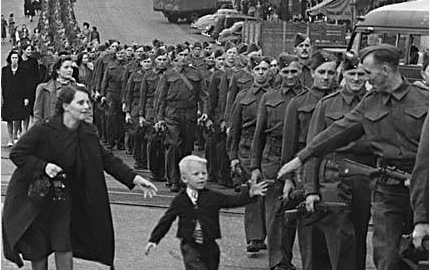
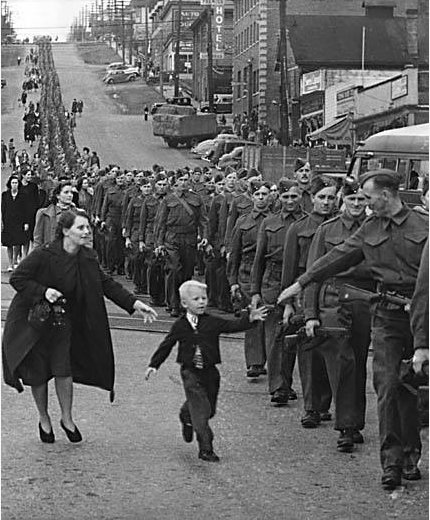
Men have been weakened through generations, mostly through wars. They are either absent fathers and husbands while fighting, or they haven’t returned, or they came back as empty shells, their souls not really present.

Women have learned through generations that they can not rely on men. Killed grandfathers and emotionally absent fathers raise sons who are not able to step into their manhood fully. In relationship with them women feel disappointed and alone, bearing children, but also taking over male responsibilities. Through this, a women’s path to their full womanhood also remains blocked. They feel superior to men or angry. Mostly, they feel betrayed and tired. Their sons they hold closely to themselves, hoping to get from them what they did not get from their fathers.

These sons can not grow fully into the role of a man and a husband. A daughter also can not learn from this mother how to fully be a woman. The circle is closed. And these are the real, serious, far reaching, tragic consequences of wars. These are also victims of wars. With recurring wars, we sometimes need to go five or more generations back to find strong, unburdened, free flowing male or female energy.

Alemka Dauskardt

men-going-to-war

Abortion (ENG)

Beyond morality, religious views and issues of women’s rights, the abortion falls like a heavy stone on the soft tissue of our soul.

It rips apart relationships, damaging not only the love and passion which started a new life, but also our ability to connect in this way ever fully again. The deep hole appears instead, where the promise of new life once was. This hole, filled only with black emptiness, has the potential to swallow us whole, to seep joy out of our lives, to darken the light and erase the taste of all the good things of life. Yes, it threatens our very existence. And the worst is that we don’t even care.

 With aborted pregnancy, a part of us dies too. The leftover part can’t wait to follow suit.

 The interrupted life leaves a permanent scar on our soul. The wound that doesn’t heal. There are no ameliorating circumstances. No absolution. No atonement which appeases the Gods. And there is no going back. This is one decision which we cannot change or turn back from. It’s final. Deadly final in its consequences. There are no explanations or justifications which would make it easier. The only thing we are left with is this black hole in our life. Of our own choosing and without an exit sign.

 If and when we really allow ourselves to look at it, to acknowledge that it is there, which often comes after decades of trying to avert our gaze from it, we are faced with overwhelming grief. Which feels like swallowing us whole. And if we agree to it, if we say yes to this unimaginable grief and surrender ourselves to pain without defence, if we open the flood gates of guilt and the heavy load of personal responsibility, if we consciously and willingly are prepared to give up our life for the one taken – then sometimes by the miracle of grace, we get a new lease on it. But only if we truly surrender to heaviness of guilt, pain, and responsibility, to full consequences of our decision for us, our relationship, and most importantly – for the child.

 Through constellation work we witness the real effect of abortion on us. One which we are often not consciously aware of, but one which nevertheless plays havoc in our lives. And the lives of those closest and dearest to us, like our other living children for example.

 Both, women and men, often unconsciously continue to punish themselves for their decision by “deadening” themselves and limiting their lives in one way or another. They can sacrifice their relationship, possibility of other partner connections in the future, their work success. These and many other good things of life are put to the imaginary “altar to abortion” which we create in our souls. The sad fact, many find out the hard way, is that there is no lessening of the burden even after decades of such sacrifice. What people in these situations find out through constellation work is that the sacrifice they (unconsciously) devote their lives to does not help, does not allow them to move on and does not change anything for the child either.

 Feelings of guilt are poor substitute for opening oneself up to the real guilt we can and must do something about. Feeling pity for oneself or the child does not help either. Neither do self blame or directing blame and anger towards the partner. Hoping for forgiveness and compassion is just another dead road, another expectation put on those who we have already taken everything from. We certainly can not and must not expect anything from the child who already has paid the ultimate price.

 If there are no ameliorating circumstances which can soften the deadliness of our decision, if there is no running away from responsibility and guilt, if there is no absolution, no atonement possible which would even things out, what then is left for us, these childless parents who pretend they can take the matters of life and death into their own hands, thinking they can decide what the right and wrong circumstances for life are as if this was in their power? Is there anything left but suffering in this black hole of our own making?

 Only that which we could not do at the time of making the decision: surrendering to forces bigger than us, understanding that we are in their hands. That we do not have the power to decide. Not even the right to find solace in eternal suffering. We surrender to these powers of Life and Death which have worked and continue to work through us in this particular way. Without the wish, the desire or the fantasy that anything could have been different to what it was. To these powers we have to surrender also our grief, even our guilt and personal responsibility eventually.

 Then, miraculously, we are all saved. So are our children. Who then rest happily in our heart space made for them through acceptance of everything exactly the way it happened. And they are at peace there. Nestled safely in their destiny, wholly in tune with it, in full agreement.


Alemka Dauskardt


Featured image: Slovakian monument to the unborn child

Obstacles to full benefits of Constellation Work experience (ENG)

We usually read something about Constellation approach and so we are intrigued and encouraged to undertake further personal research. Or we hear about constellations from acquaintances who already have had some positive experience and are recommending them. A number of people come across this method during their education for psychotherapists or in other disciplines in which this approach is applied. However, when we start to get to know the constellation approach, each of us brings the whole of our life experience, accumulated acquired knowledge as well as all learned patterns with which we relate to the world: our world view, prejudices, expectations, ways to cope with unmet expectations, hopes, desires, plans, fears, defence mechanisms, trust or distrust. Each of us has our own style of “being in the world”. This style comes to light with the first steps into the world of constellations, often already in the first query or signing up for the workshop.

So there are those who wish to attend, but do not want to pay the full price, often with the explanation that they only want to be guests or just observers. However, in constellations, as well as in life, of course, there are no guests or observers. And all those who want to be in life fully must of course accept the full price for their lives, whatever that means for each and every one of us.

Then there are those who want to transfer all the responsibility for their attendance, for their own work, as well as for the outcome (for its “success” or “failure”) to the facilitator. Others want to keep control in every way, so they know in advance what they want from a constellation, as well as what constellations can or can’t give them. They also know exactly what they should work on. They plan in advance and require from the facilitator to deliver what they want, rather than what is really necessary. What they really want is to manipulate the facilitator so that they do not have to change. In any case, the facilitator, as the most exposed aspect of the work is often exposed to such attempts of manipulation and control, sometimes even to hidden, or not so hidden, aggression.

The entire constellation approach is also occasionally exposed to sharp criticism from many sides. Most commonly from psychotherapists who also want to control it and who reject all aspects of this approach which does not fit into the scientific paradigm of their profession. They want to present constellations as just another psychotherapy method which can be safely practiced only in the context of their discipline. So, the first thing they have to do is to throw the soul out of constellation work. And what is constellation work without a soul!?! Only a technique which can then easily be put into the pocket of a psychotherapy cloak.

Constellation approach, if practiced faithfully and with integrity, cannot be planned, controlled or manipulated; neither submitted to our will, our thinking and attitudes. And this is precisely one of the biggest challenges for many: giving up control. This does not mean we should hand over control to a facilitator, neither to constellation approach itself, but to something bigger than us, accepting with humbleness the forces of nature that govern our world and our relationships. A facilitator who does not feel this humbleness himself, will easily be manipulated. Rightfully so. Also, if the facilitator’s primarily goal is to be liked by others, to satisfy them, as well as to achieve material or other gain through this work, then he will be an easy target for those who want to have control over constellations. Sometimes people prefer such facilitators and are willing to pay even more just to stay in control and not have to change.

Some in constellations see the new God. Others their replacement family- this time a good and just one, warm and close, without neglect, trauma, abuse and the abusers. Often, of course, we are looking for different parents instead of those we have, expecting from constellations (and facilitators!) to be rescued, pitied or supported in our “just” condemnation and rejection of others.

Some fall in love with Constellations at the first sight, like with a partner (who usually they do not have) and some see them as an emergency exit from an unhappy marriage or professional failure. Some in Constellations see a new profession or source of income, status or power that could not be achieved through other means.

All this might seem possible for some time, but is unavoidably followed by disappointment in the long run. Constellation approach will inevitably change us, force us to get rid of such desires; or it will simply get rid of us . In one way or another it will show us “who the boss is”.

Some only want another certificate or diploma from yet another technique, so that they can become an expert from yet another approach. Either because it brings the prestige and advantage over others, or so that they could better “help others “. Compulsive helpers will often obtain many diplomas and go to many different schools in order to satisfy their unconscious need to help someone in their family, rather than face the dynamic which lies behind such efforts.

Through constellations many want to save others, and sometimes even the whole world. If nothing else, at least change it for the better, so that there are no abused children, no aggressive men, emotionally cold mothers, nor killing and wars. Some run into constellations running away from the aggressor or from their own aggression.

Some want to rise “above it all “, even above the forces of life and death that are in charge and which show themselves here. They already know it all, as they have already worked a lot “on themselves “, and have already been on the “spiritual path “. As if they have acquired some special privilege with these forces, as if the rules of this Earth do not apply to them, as if they themselves are friends or lovers of these forces, as if they were at the same level with these forces, so they can behave towards them this way or another, according to their will and whim. So, they can agree or disagree with them. Even these “spiritual people” remain surprised by the depths to which Constellations take us and by the new insights, both personal and spiritual in nature which are gained through them.

Whichever of these styles we have, the encounter with constellations will present it with a challenge to which we will have to find the answer, also in keeping with our style. So, we will run away or belittle, get angry, feel hurt or belittled, used, perhaps even abused, re-traumatized and disappointed. Or we feel enthusiastic, in love, express enlightened, enthralled, astonished, surprised, isolated, connected, complete, envious, superior, chosen, special, confused or offended.

One thing is certain: the encounter with constellations will be challenging for our worldview. And we will somehow have to respond to this challenge. The way we choose will depend on our style of being in the world and on our ability to grow and change. Those who persevere on this path have to count with constant challenges that will not always be pleasant and that will require constant cleansing. This process that involves the purification of the senses, of the will and the spirit is time-consuming and not always easy. This path is for the persistent only, but above all for those who are humble and patient, for those who know that:

“soft water with time defeats the mighty hard stone, so that hard is weak and that immaterial enters where there is no space, those who appreciate doing without doing. Those who know that teaching without words and doing without action is understood by the few.” ( Tao Te Ching , number 43 ) .

The experience of constellations will, therefore, be what we make of it. It is true that constellations can be a door to that which is most essential, but only for those who stumble upon them in the darkness of ignorance. And for those who are patient or brave or desperate enough, in any case prepared for a long wandering without clear guidelines or goals. The door is, of course, here for all .

Once we go through our dark night of the soul and pass through the doors of purification, we discover ourselves different, cleaner, more complete. At the same time deeply connected and independent.

Then we turn to life as it is and we become fully open for its challenges and gifts, at peace with everything exactly as it is, we live effortlessly from this empty center, in harmony, being one with everything at the same time.

How? With constant challenge to live from that center, in harmony with our deepest nature.

Constellations can help us find the way to such a center. How? Truthfully and with love, of course!

Alemka Dauskardt,
Constellation Facilitator